Wednesday, 18 September 2013

Wordless Wednesday - occupations

I have a large collection of old (and comfortably out of copyright!) books, many of therm with illustrations. In fact, I bought quite a few of the books for the illustrations alone. I have scanned some of them, although there is still a long way to go.

Just for fun, I thought I'd share some of them. I've chosen a selection from my collection depicting occupations. I had forgotten that I had a picture of a diver, which would have been topical a week ago, when Sarah Millican's episode of Who Do You Think You Are was shown. Oh well. So here is the diver, and pictures of a few other occupations that your ancestors might have followed.


Diver
Bookbinding


Box-making

Firemen

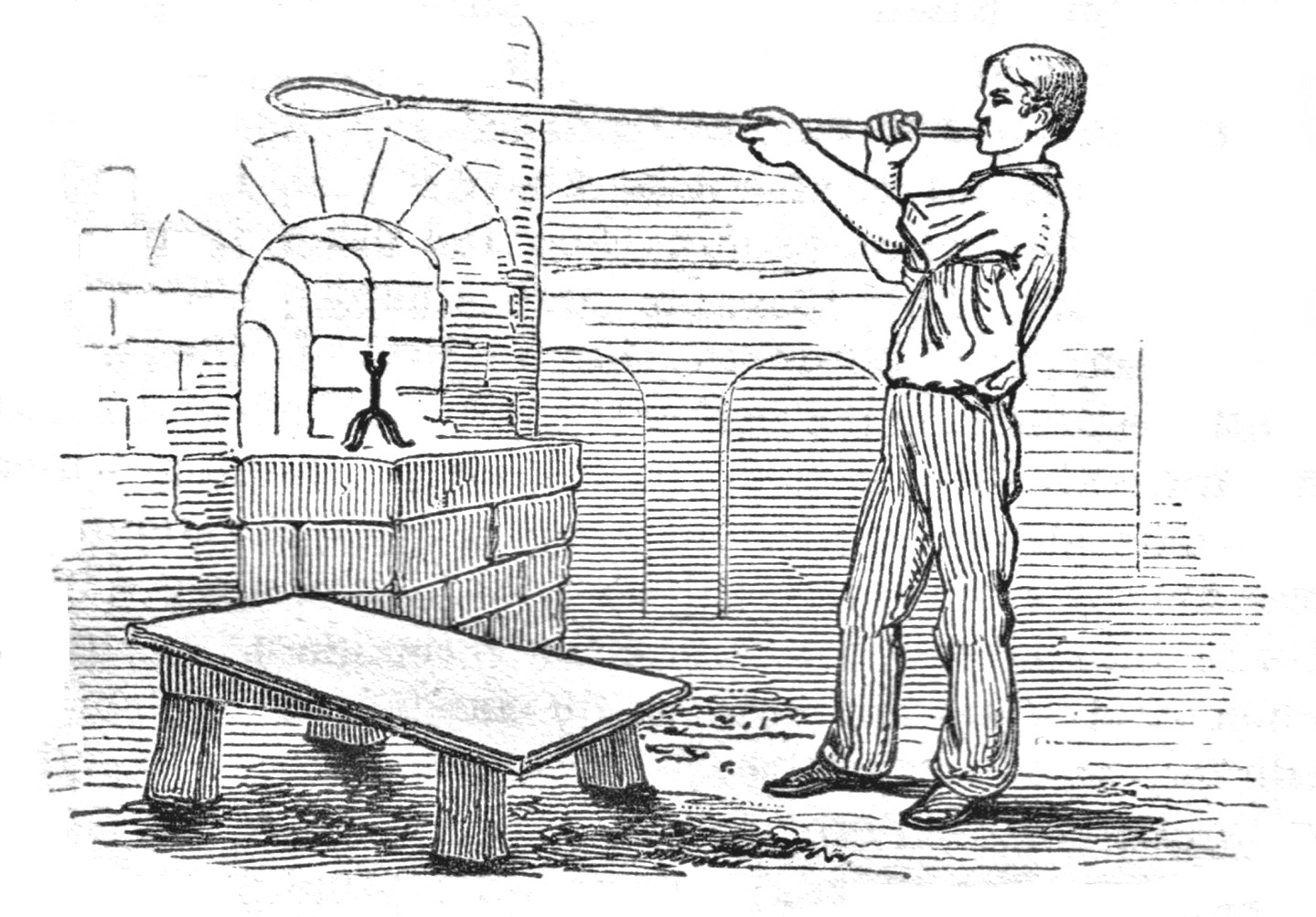
Glass-blower

Potter


Print

Tuesday, 17 September 2013

Copac update: The National Archives Library added

Copac National, Academic and Specialist Library Catalogue
I'm a big fan of copac* and I use it a lot to find resources in UK and Irish libraries. Of course I use Worldcat, too, but if you are based in the UK or Ireland there are obvious advantages to using copac* to search only libraries in our two countries. The contents of many major British and Irish libraries are listed on both sites, but some are only on Copac. The two sites offer different search experiences, so where a library's holdings are on both, you might choose to use one site or the the other, depending on your requirements at the time.

Here is today's announcement:
Copac is pleased to announce that the Library holdings of The National Archives have been added to Copac. The collection serves primarily as a research library for users of the archive and holds approximately 65,000 books and journals as well as online resources. It is open to visitors and staff of The National Archives.
 The Library holds publications from the 17th century onwards and is still growing. Primarily a history library, its collection includes local history record society series, military history especially covering the First and Second World Wars, family history and directories including London Post Office directories. It also houses complete sets of the published State Papers and other calendars of public records, a good collection of Acts and Statutes and a range of academic journals. A growing number of online resources are also available.
 To browse, or limit your search to the holdings of The National Archives library, go to the main tab on copac.ac.uk and choose ‘The National Archives Library’ from the list of libraries.
This is a library that I know well, because I have the good fortune to work in the building where it is housed. I often think that if it was a standalone library it would be very impressive, but it is somewhat overshadowed by the millions (yes, millions) of documents in The National Archives. The library used to be in its own area of the building at Kew, behind a discreet pair of double doors leading off the old Microfilm Reading Room. I suspect that there were regular users of the archives who never even realised that there was a library. The library is still in pretty much the same location, but the doors have gone and the wall has come down, so it's hard to miss now if you are in the open-plan Research and Enquiries Room.

It's still not used as much as it should be, and you could be missing out if you aren't aware of some of the treasures it holds. The books, periodicals and other resources support and complement the archival holdings, and they include many volumes that are effectively finding aids to the documents. There are also many works that are the fruits of authors' research in The National Archives. These books and articles can be really useful; one of my favourite tricks is to consult works in the same general area as my own research and look at the footnotes and references. Good authors always cite their sources comprehensively and accurately, don't they?

So if you are planning a visit to Kew, or any other archive, it's a good idea to check out the library Books are my bag campaign to promote bookshops
catalogue as well as the archive catalogue. It's a good idea to check out library catalogues anyway. It just is. Quite an appropriate piece of news just after the launch of the

Print

Thursday, 29 August 2013

Soldiers' wills online - good news (up to a point)


Will Form in a soldier's pass book 1945
As reported in the Guardian and on the BBC, the long-awaited collection release of soldiers' wills is at last being released by HM Courts and Tribunals Service. Like most other genealogists I am delighted that the Probate Service has finally made some data available online, but I'm afraid that as it stands, the service leaves a great deal to be desired.

On the positive side, they have provided an online index to some of their records, which is something that the General Register Office for England and Wales has yet to achieve. And at long last it is now possible to pay by credit or debit card, a particularly welcome move for overseas searchers. Also, the range of years covered, 1850 to 1986, starts 8 years before the Principal Probate Registry, and continues 20 years after the most recent calendars from the main collection, online at Ancestry.co.uk.

So far, so good, but there is still a long way to go. First of all, unless you use the link from one of the news stories, the introductory search page might be hard to find, since it is not in the Probate Service part of the HM Courts and Tribunals Service site, but in the Death and Bereavement area of GOV.UK. The Courts and Tribunals site is due to be merged into GOV.UK, so this confusion should only be temporary. The information, or lack of it, on the search page is of much more concern.

The introductory page gives only the coverage dates (1850-1986) and:

     You will need: 

    • the soldier’s last name and year of death to search for a will 
    • to register for the service with an email address 
    • to pay £6 to access a will

Regrettably it does not tell you that only the years 1914 to 1921 are included in the initial launch, or indeed give any indication that the collection is incomplete. Nor is there any background information whatsoever.

There are both basic (surname and year) and advanced search functions, but both searches will only allow you to search a single year at a time, there is no facility to search a range of years. The extra fields in Advanced Search are: Forename, Month of Death, Day of Death and Regimental Number. I don't know how or why these criteria were chosen, but they are not the ones I would have picked. For an ancestor who died in the two World Wars the exact date and regimental number can easily be found on the Commonwealth War Graves Commission site, but outside of these time periods you are unlikely to know these details, although you might know the man's regiment, or at least be able to hazard a guess. As it stands, searching for the will of a man with a common name could prove very expensive at £6 a time, with only a name, year and number. This is much less information than is provided in the regular probate calendars.

A regular calendar entry (which include wills and administrations of some soldiers who died in the World Wars) might read as follows:

COLEMAN Reginald John of 36 Trewsbury Road, Sydenham, Kent, lance-corporal 36th Machine Gun Company died 19 June 1917 in France or Belgium, Probate London  30 October to Frederick Vincent Buckhurst, bank inspector and Edward Ffoulkes Jones, commercial clerk. Effects £3433 5s 3d

If this had been one of those in the newly-released collection, his entry would simply read:

COLEMAN Reginald John 71482 19 June 1917

The search page contains a link at the top 'Beta: This is a new service - your feedback will help us to improve it' and I can only suggest that anyone who is interested in these wills gives the site a thorough road test and feeds back their own opinions and suggestions.

Print

Monday, 12 August 2013

Fantastic find in a newspaper!

I've always loved using newspapers for family history. Mostly this has meant looking at old newspapers, online, on film or even in hard copy - which reminds me, I must pay a fond farewell visit to Colindale before it closes later this year. More and more titles are being made available online all the time, revealing new details and sometimes astonishing breakthroughs for researchers.

But this time it is a current newspaper that got me and my family excited. On 27 July the paper in question ran a feature to mark the 60th anniversary of the signing of the peace treaty of Panmunjom which brought the Korean War to an end. My aunt is a regular reader of the paper, and was interested in the feature because her late husband, my uncle Tommy, had served in that war. She got the surprise of her life when she looked at picture of a group of soldiers and right in the middle of the picture, there was Tommy!

She rang the newspaper and asked if she could have some copies of the picture, which she was perfectly willing to pay for, but instead they said they would send her a couple of copies, free of charge! We are a big family, so quite a few of us wanted copies. Technology to the rescue; you can take pretty good pictures with a mobile phone, so a copy of the photo has now been emailed around (it took me about half an hour on the phone instructing my mother, step by step, how to forward an email to me, but we got there eventually).

I've chosen not to show the picture, because the copyright belongs to the paper, and I haven't named the paper either, because they might not appreciate being 'outed' as a paper that gives away free pictures. Sorry about that. So you have a nice generic picture of the badge of the Black Watch, my uncle's regiment. I thought the story was worth telling, though, because it shows how you can find pieces of family history in surprising places, and when you are least expecting them. So remember to keep your eyes peeled, folks

Print

Saturday, 8 June 2013

Shopping Saturday - Selfridges decorations for the Coronation in 1937

.

Selfridges is a store that has always known how to put on a show. A special occasion like a coronation is a great excuse to hang out the flags - literally. This week Britain has been marking the 60th anniversary of the present queen's coronation, so it seems like an appropriate time to look back at the coronation of her father, King George VI, in 1937.

The whole of Selfridge's Oxford Street and Orchard Street frontages were decorated with flags, sculptures, pictures and banners bearing the Royal arms, and the company produced a 20-page booklet, from which these illustrations are taken.


 The centrepiece was a sculptural group 'The Empire's Homage to the Throne' over the main entrance, and above this was the Royal Medallion featuring portraits of the new king and queen.


Above this was a giant representation of the Imperial State Crown, amid a gold and silver sunburst, and the whole thing was surmounted by the figure of Peace 'Let Peace Prevail' which towered 150 feet above ground level.

Just above window level on the Oxford Street front was a series of 18 bas-relief panels depicting scenes in British history, from the Druids and Stonehenge to the Armistice in 1918. These were flanked by two 35-foot high sculptures representing Canada and India.

Round the corner in Orchard Street was a giant picture depicting the great seaports of the British empire, with a border consisting of the house flags and funnel markings of major British shipping companies. Either side of this were two more sculptures, this time for Australia and South Africa. Finally, each of the large plate-glass windows all round the store at street level, normally full of merchandise, contained an oil painting of a scene from the His Majesty's life. There were 30 of these in all. It must have been quite a sight.


Print